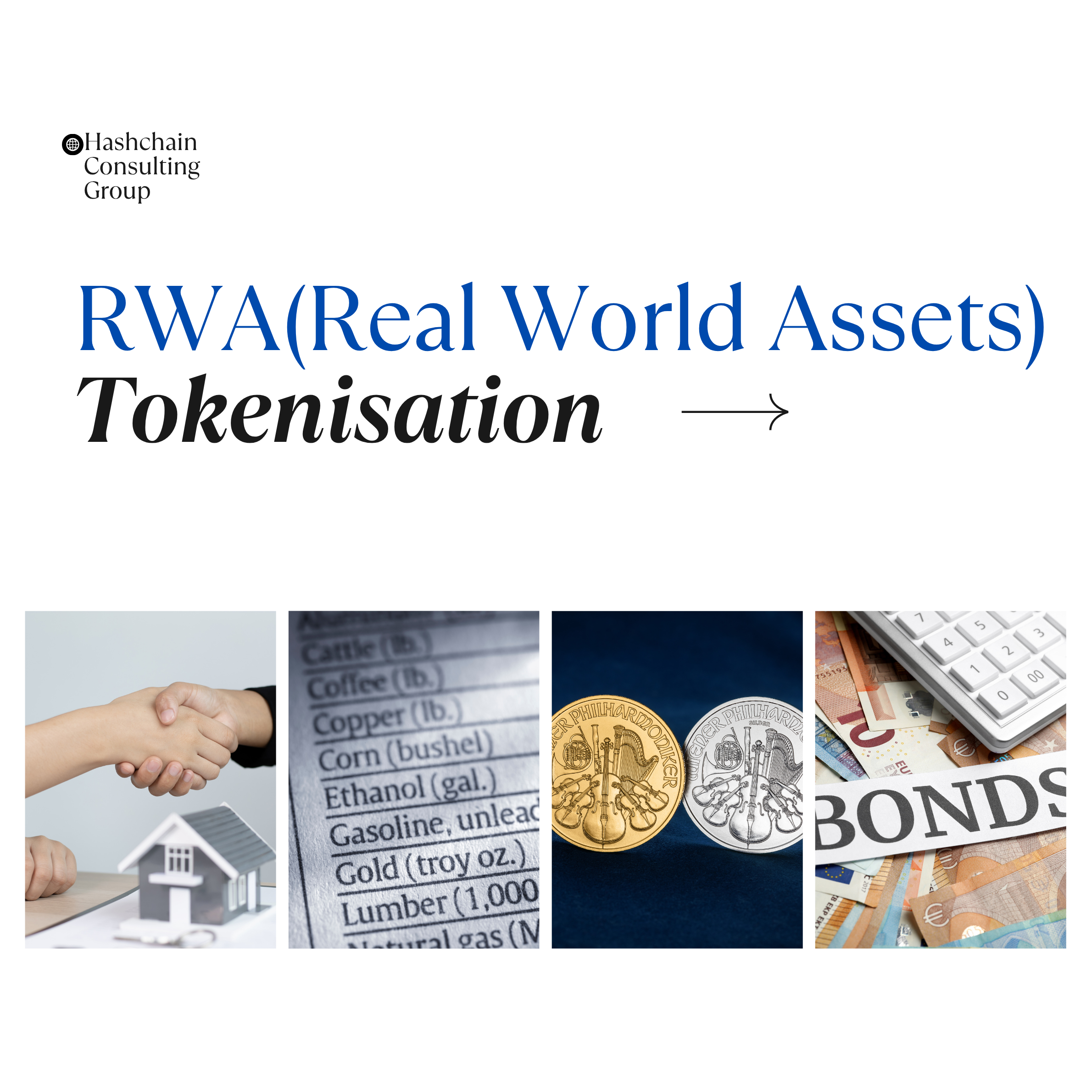

RWA Token Marketing Compliance
Author: Dr. Rahul Dev: Director, Hashchain Consulting Group; international patent attorney, technology business lawyer, AI strategist, and crypto intelligence researcher with 20+ years of experience across digital assets, blockchain law, tokenisation, patent strategy, artificial intelligence, and international business.
Contact me on Twitter or LinkedIn. You can also message me on Telegram @ RahulDev or send a message on WhatsApp or email at rd (at) patentbusinesslawyer (dot) com or reach out via the contact page, or send a direct message here.
This content is provided for general information and research purposes only. It does not constitute legal, financial, investment, tax, regulatory, or other professional advice. Readers should obtain advice appropriate to their specific circumstances before acting.
Tokenization of real‑world assets creates a narrow but critical fault line between marketing claims and legal reality: portraying a token as “backed,” “redeemable,” or equivalent to direct ownership can produce securities‑law, custody, and insolvency exposure if the economic substance reflects a regulated investment. Dr. Rahul Dev, Director at HashChain Consulting Group USA, an international patent attorney, technology business lawyer and AI strategist with a PhD in Data Science and more than 20 years of cross‑border advisory experience, brings a practical, multi‑jurisdictional lens to these risks, including patent strategy.
Recent regulatory developments have made this topic urgent: SEC staff reiterated in late 2025 and early 2026 that changing the recording technology does not alter the securities‑law analysis, underscoring that disclosure, custody, and anti‑fraud obligations still apply. That guidance, together with IOSCO custody recommendations and industry practice, concentrates compliance pressure on how issuers describe legal ownership, custody arrangements, proof‑of‑reserves, redemption mechanics, transfer limits, and insolvency treatment, informed by technology law guidance.
For companies, founders, investors, legal teams and technologists, the consequence is concrete: marketing language can create enforceable expectations and enforcement risk unless it is precisely tied to the issuer’s legal wrapper, contractual rights, and operational controls. Practical responses include defining what “backed” means operationally, qualifying safety claims, aligning investor materials with issuance documents, and documenting verification methods, and supporting work such as patent research.
RWA Token Marketing Compliance demands precise, legally grounded descriptions of backing, custody, redemption, and verification. This article equips readers to assess RWA Token Marketing Compliance in their products: they will be able to determine when a token is likely a security, evaluate disclosure gaps about backing, and apply compliant disclosure language and a pre‑publication checklist to reduce legal and commercial risk.
Why Tokenization Does Not Change Securities-Law Obligations
The SEC’s position is clear: putting a security on a blockchain does not make it something other than a security. Every marketing claim about an RWA token’s “backing” must hold up against the same anti-fraud standards that apply to traditional offerings. Getting this wrong creates enforcement risk, litigation exposure, and reputational damage that no disclaimer can fix.
The foundational rule for RWA Token Marketing Compliance is substance over form. SEC staff materials through late 2025 and into 2026 reiterated that tokenized securities remain subject to the same registration, disclosure, custody, and anti-fraud requirements as their traditional counterparts. Changing the recording technology does not change the legal nature of the instrument.
This matters for marketing teams because the temptation is to describe tokenized products as novel, simpler, or safer than conventional securities. If the token represents an interest in real estate, treasuries, private credit, or commodities through an SPV or trust, the economic substance determines regulatory treatment. Marketing that obscures this analysis, whether intentionally or through careless language, risks crossing from promotion into material misstatement.
When does an RWA token become a security?
When its economic substance is securities-like. If investors contribute capital to a common enterprise with an expectation of profit derived from the efforts of others, the Howey analysis applies regardless of the blockchain wrapper. Issuers cannot market around this by calling the product a “digital asset” or “utility token” when the underlying arrangement triggers securities law.
Calling a security a token does not remove registration, disclosure, or anti-fraud obligations from the issuer.
How to Describe Backing Without Overstating Safety
The word “backed” carries weight that most marketing teams underestimate. Saying a token is “backed by real-world assets” implies a level of protection that may not exist in practice. The compliant approach requires specificity.
Define the legal claim, not just the asset
Describe what the token holder actually receives: a contractual right under an SPV operating agreement, a beneficial interest in a trust, or a claim against an issuer under specified terms. If the holder does not own the underlying asset directly, do not imply otherwise.
Compliant framing: “Each token represents a fractional interest in [SPV name], which holds [asset description] under the terms of [governing document].”
High-risk framing: “You own the underlying asset directly.”
Qualify every safety-related claim
Every claim about reserves, custody, or redemption should tie to a specific, verifiable control. “Assets are held with [named custodian] under a custody agreement requiring segregation and periodic third-party attestation” is defensible. “Institutional-grade custody eliminates risk” is not.
Reserve verification claims deserve particular scrutiny. Attestations may be infrequent, scope-limited, or silent on off-chain liabilities, liens, or encumbrances. Marketing should state what the attestation covers and when it was last performed, not imply continuous, perfect 1:1 backing.
A reserve attestation only proves what it measured, when it measured it, and nothing about risks it did not examine.
Core Disclosure Areas for Institutional RWA Tokens
Institutional buyers and their counsel focus on four areas where marketing claims most often diverge from legal reality.
Ownership and issuer structure
Disclose the issuer entity, any SPV or trust, the custodian, the reserve administrator, and the governing law. Token holders need to understand the chain of entities between them and the underlying asset, and may consult legal directory research to identify counsel.
Proof of reserves and verification limits
State the methodology, frequency, scope, and provider of any reserve verification and consider technology law research as needed. Distinguish between a full audit and a point-in-time attestation. Do not use “audited” when the engagement was an agreed-upon procedures report.
Redemption and transfer restrictions
Specify who may redeem, minimum and maximum amounts, processing timelines, fees, and any conditions under which redemption can be suspended. If transfer is limited by allowlists, jurisdiction restrictions, or lockup periods, disclose these constraints. Marketing that implies frictionless liquidity while the legal documents contain suspension rights is a material inconsistency.
Insolvency treatment
Explain what happens if the issuer, SPV, custodian, or reserve administrator becomes insolvent. “Backing” does not automatically mean bankruptcy-remote protection. If the structure has not been tested or opined upon for insolvency remoteness, do not claim it.
Compliance Risks for Marketing Teams
Three patterns create the highest enforcement and liability exposure in RWA Token Marketing Compliance.
Misleading safety claims. Phrases like “fully backed,” “safe,” “guaranteed,” or “risk-free” are red flags unless each specific risk is narrowly and completely addressed. Reuters’ 2026 practical-law coverage confirmed that RWA token marketing must meet the same accuracy standards as any securities-related communication.
Unsupported equivalence claims. Stating that a token is “the same as” owning the underlying asset when legal and operational differences exist creates liability even if a whitepaper somewhere contains qualifying language.
Inconsistent materials. If the marketing deck promises broader rights than the subscription agreement grants, the inconsistency itself is a compliance failure. Legal, compliance, and marketing teams must review all materials together before publication.
Pre-Publication Checklist for Legal and Marketing Teams
This pre-publication checklist is central to RWA Token Marketing Compliance.
- The token’s securities-law classification is stated or referenced, not avoided.
- “Backing” is defined in operational terms: asset type, custody arrangement, segregation, and verification method.
- Redemption terms match the legal documents, including suspension rights and timing.
- Transfer restrictions are disclosed, including allowlists, jurisdiction limits, and lockups.
- Insolvency treatment is described honestly, including gaps in bankruptcy-remoteness analysis.
- No absolute safety language appears without narrow, specific qualification.
- Reserve verification claims state scope, date, and methodology.
- All marketing materials, whitepapers, and investor decks are consistent with the offering documents.
- Legal and compliance sign-off is documented before publication.
- A process exists for updating disclosures when facts change.
The safest marketing claim is the one that matches exactly what the legal documents promise and nothing more.
Practical Examples of Compliant and Non-Compliant Language
| Area | Compliant | Non-compliant |
|---|---|---|
| Backing | “Token represents an interest in assets held by [structure], subject to disclosed conditions.” | “Fully backed and safe.” |
| Ownership | “Holders have contractually defined rights under the issuer documents.” | “You own the underlying asset directly.” |
| Redemption | “Eligible holders may request redemption subject to KYC, limits, timing, and fees.” | “Redeemable anytime without friction.” |
| Custody | “Assets are held with [custodian] under disclosed safeguarding terms.” | “Institutional-grade custody eliminates risk.” |
| Verification | “Reserves are periodically attested by [provider], most recently on [date].” | “Always 1:1 and perfectly safe.” |
Conclusion
RWA Token Marketing Compliance requires issuers to describe what the token legally represents, how assets are held, what can fail, and what verification actually proves. The strongest risk comes from language that implies safety, direct ownership, or frictionless redemption when the legal documents contain qualifications, restrictions, or untested insolvency assumptions. Every claim about backing should be specific, qualified, and consistent across all materials. The single most important step issuers can take is to implement a pre-publication review process where legal, compliance, and marketing teams verify that no published claim exceeds what the offering documents actually grant. Teams facing uncertainty about disclosure obligations for tokenized securities should consult securities counsel experienced in both digital asset structures and SEC anti-fraud standards.
Need Crypto, Blockchain, or Digital-Asset Research Support?
Dr. Rahul Dev works with founders, companies, investors, professional advisers, and technology teams on crypto intelligence, blockchain and digital-asset strategy, AI strategy, tokenisation, patent strategy, regulatory research, international market entry, compliance analysis, and technology commercialisation. If you require structured research or strategic analysis for a crypto, blockchain, artificial intelligence, intellectual property, regulatory, or international business matter, get in touch to discuss the scope of work.
Frequently Asked Questions
What is RWA Token Marketing Compliance?
RWA Token Marketing Compliance ensures that marketing for tokens backed by real-world assets does not mislead investors by overstating safety or evading securities laws. It involves adherence to regulations such as SEC securities rules, requiring issuers to clearly disclose the true nature of the token, asset custody, and potential risks, including redemption and insolvency. Issuers must describe assets accurately, avoiding phrases like “risk-free,” which could be misleading.
What is securities-law risk in tokenization?
Securities-law risk in tokenization refers to the legal obligations that apply when a token functions as a security. This means compliance with the Securities Act and Exchange Act, including disclosure, anti-fraud, and custody obligations. The SEC emphasizes that simply using blockchain does not eliminate these responsibilities, as reiterated in their 2026 guidance that tokenized securities remain under traditional securities regulations.
What disclosures are needed for RWA token marketing compliance?
RWA token marketing compliance requires comprehensive disclosures covering the token’s legal structure, issuer, custody arrangements, proof of reserves, and token-holder rights. Regulators expect clear explanations of how assets are safeguarded and redeemed, potential risks, and limitations. As noted in the IOSCO’s 2026 recommendations, these disclosures must prevent misleading claims and align with anti-fraud standards.
What is the role of proof-of-reserves in RWA tokens?
Proof-of-reserves verifies that the assets backing a token are held as claimed, offering transparency and trust. It involves periodic attestation or auditing of reserve holdings. A 2026 industry focus highlights the importance of accurate reserve reporting to maintain compliance and investor confidence. The SEC and IOSCO emphasize the need for reliable verification to prevent overstating token safety and ensuring marketing claims align with reality.
What is the impact of transfer restrictions on token marketing?
Transfer restrictions impact token marketing by influencing how easily a token can be bought or sold. They must be disclosed as they affect liquidity and could contradict claims of being “easily transferable.” Marketing materials must accurately describe any constraints, such as jurisdiction blocks or KYC requirements, to comply with regulations and avoid misleading investors, as emphasized by the SEC’s ongoing regulatory focus in 2026.